LAS VEGAS, NV, Jan. 16, 2026 (GLOBE NEWSWIRE) -- Disclaimer: This article is for informational purposes only and does not constitute medical advice. Red light therapy devices are wellness products and are not intended to diagnose, treat, cure, or prevent any disease. Always consult a qualified healthcare professional before starting any new wellness routine. If you purchase through links in this article, a commission may be earned at no additional cost to you.
View the current Glokore Therapy Wrap offer (official Glokore page)
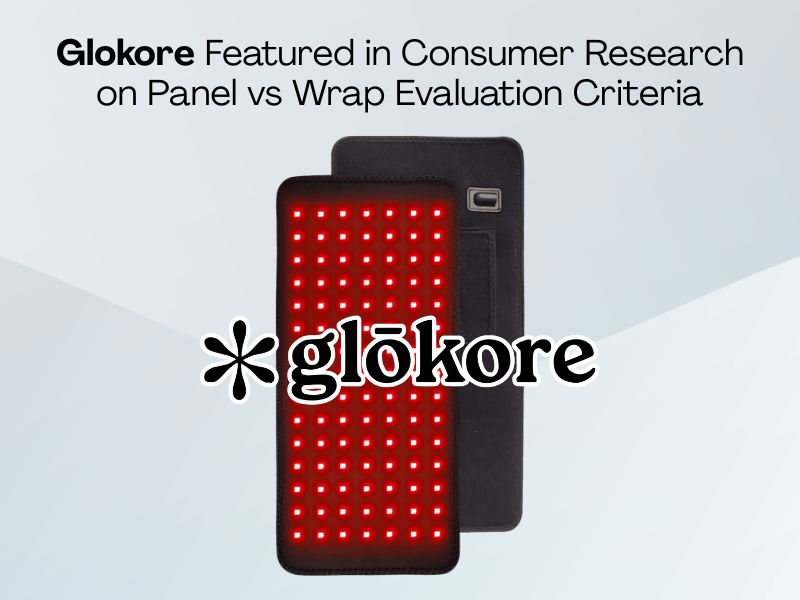
The headline phrase "Most Trusted Red Light Therapy Wrap 2026" reflects common consumer search language and review-signal research observed in this category. It does not represent a ranking, endorsement, or verified claim of clinical performance. This report is a consumer education analysis focused on evaluation criteria, format differences, and publicly available manufacturer information.
Why This Analysis Matters in 2026
Consumer search behavior heading into 2026 reveals a clear pattern: people researching red light therapy wraps are increasingly confused about the panel vs wrap debate. Search queries for "red light therapy wrap," "660nm 850nm therapy," and "panel vs wrap comparison" have grown as more consumers explore non-invasive wellness options.
This report analyzes consumer evaluation criteria for wrap-format devices, examines the science behind photobiomodulation wavelengths, and provides a decision framework for determining which format may align with individual needs. This analysis does not claim that any device produces specific outcomes, and it does not recommend one product over another. It is designed to help readers make informed decisions based on publicly available information.
Glokore has previously been featured in consumer research covering their light therapy product line, including analysis of their Light Therapy Mask consumer trust evaluation and Face Mask format comparison research. This report expands that coverage to examine their wrap-format device.
View the current Glokore Therapy Wrap offer (official Glokore page)
What "Most Trusted" Means in This Report (And What It Does Not)
The phrase "most trusted" in the headline does not mean "best performing," "clinically superior," or "guaranteed effective." In this report, "trust" refers to how easily consumers can verify information, understand device limitations, and assess whether a product aligns with their personal needs — not whether a product delivers specific outcomes.
Trust signals examined in this category include:
Transparent Specifications: Does the manufacturer clearly publish wavelength output, LED count, and technical details? Consumers benefit when companies provide verifiable data rather than vague marketing claims.
Published Wavelengths: Are the specific wavelengths (such as 660nm red and 850nm near-infrared) clearly documented? Wavelength transparency allows consumers to compare devices against published research on photobiomodulation.
Clear Refund and Return Policies: Does the company publish accessible refund terms? Transparent satisfaction policies reduce purchase risk for consumers exploring this category.
Verifiable Contact and Support Access: Can consumers easily reach the company via phone, email, or chat? Accessible support signals operational legitimacy.
Safety Disclosures: Does the company clearly communicate what the device is and is not designed to do? Honest limitation disclosures build consumer confidence.
Usability and Adherence Likelihood: Is the device designed for realistic, consistent use? A device that fits into daily routines is more likely to be used consistently over time.
Portability and Lifestyle Fit: Does the format align with how the consumer actually lives? Practical design considerations affect whether a device gets used or sits in a drawer.
These factors are evaluated for transparency and accessibility purposes only — not to imply superiority, performance, or expected outcomes. These criteria relate to consumer verification, not device performance, and they inform which products consumers may find easier to evaluate — not which products "work better."
The Panel vs Wrap Debate: Understanding Format Differences
If you've researched red light therapy, you've encountered conflicting advice about whether panels or wraps are "better." Here's the straightforward answer: neither format is universally superior. Each serves different applications more efficiently.
How Panels and Wraps Differ
Panels are stationary devices designed for broad coverage. They may be more practical for people seeking widespread application across multiple body areas simultaneously. Panels typically require dedicated space, represent higher price points, and require users to stand or sit in position during sessions.
Wraps are flexible, wearable devices designed for targeted application. They conform to specific body areas and may align better with people who have localized needs, value portability, or prefer hands-free use during other activities.
Format Efficiency Considerations
When wraps may align better with consumer needs:
Localized application areas such as knees, backs, shoulders, or joints.
Portability needs, including travel or limited home space.
Hands-free use preference for multitasking during sessions.
Budget considerations, as pricing varies by manufacturer and device size.
Lifestyle fit, where the device must integrate into realistic daily routines.
When panels may be more practical:
Full-body coverage requirements across multiple areas simultaneously.
Dedicated wellness space available for stationary equipment.
Higher power output preferences where larger LED arrays are prioritized.
This is a format efficiency comparison, not a clinical effectiveness comparison. Neither format has been proven superior for producing specific outcomes.
The Science: Photobiomodulation at the Mechanism Level
Understanding the research foundation behind red light therapy helps consumers evaluate device claims more critically. This section examines mechanism-level findings — not outcome predictions.
What Photobiomodulation Research Examines
Research on photobiomodulation examines how specific wavelengths of light may interact with cellular energy pathways under controlled conditions. Consumer wellness devices are designed for general use, and individual experiences vary.
Published studies have investigated how red and near-infrared light at specific wavelengths interacts with mitochondria, the energy-producing structures within cells. When light in certain ranges reaches mitochondrial proteins, research suggests it may influence the production of adenosine triphosphate (ATP) — the molecule cells use for energy.
Wavelength Penetration Differences
Different wavelengths penetrate tissue to different depths, which is why many devices combine multiple wavelengths:
Red light (630-670nm): Research has examined this range primarily in relation to surface and near-surface tissue applications.
Near-infrared light (810-850nm): Research has examined this range in relation to deeper tissue penetration potential.
Devices combining both wavelength ranges aim to address multiple tissue depths. According to manufacturer specifications, some devices in this category combine 660nm red light with 850nm near-infrared light to provide dual-wavelength coverage.
Important Context on Research Translation
Mechanism-level research provides context for understanding the technology category but does not predict individual outcomes from consumer devices. Research conducted on clinical-grade equipment under controlled conditions differs substantially from home use of consumer wellness products.
View current Glokore Therapy Wrap details (official Glokore page)
Technical Specifications: What Consumers Research
When evaluating red light therapy devices, understanding key specifications helps with informed comparison. This section examines publicly available manufacturer information.
Glokore Therapy Wrap Specifications (Per Manufacturer)
According to the company's published product information:
- Wavelengths: 660nm red light and 850nm near-infrared light
- LED Count: 120 infrared LEDs (850nm) + 120 red LEDs (660nm) = 240 total
- Dimensions: 17.7" x 8.3"
- Weight: 1.3 lbs
- LED Lifespan: 50,000+ hours (per manufacturer)
What's Included (Per Manufacturer)
According to the company's website, each package includes:
- 1x Glokore Light Pad
- 1x Intelligent remote control
- 1x Power Cord
- 1x Connecting Wire
- 1x Adaptor
- 1x Stretchy strap
- 1x User manual
Certifications and Compliance Language
According to the company's published information, the device lists manufacturing and safety compliance standards such as CE and RoHS. These references do not indicate FDA clearance or approval as a medical device.
Consumers should understand that safety certifications indicate compliance with manufacturing standards — they do not validate therapeutic claims or guarantee specific outcomes.
Company Accessibility and Support
Verifiable contact information and transparent policies are trust signals consumers can evaluate directly.
Contact Information (Per Official Website)
According to the company's website, Glokore's customer support can be reached via:
- Phone: (888) 899-8534 (9-5 PT Monday-Friday)
- Email: support@glokore.com
- Live Chat: Available 24/7
- Company: Direct Dash Co dba Glokore
- Address: 5725 S Valley View Blvd Ste 5 #70216, Las Vegas, NV 89118-3122
- Returns Address: 6413 Bandini Blvd, Commerce, CA 90040
Refund Policy (Per Official Website)
According to the company's published refund policy, products may be returned within 60 days of the received date when postmarked within that timeframe and accompanied by an RMA number from customer service. Shipping and handling costs are non-refundable unless otherwise stated. Consumers should read complete terms on the official website before purchasing.
View current Glokore Therapy Wrap information (official Glokore page)
Self-Assessment Framework: Which Format Fits Your Situation?
Rather than recommending a specific product, this framework helps consumers determine which format may align with their individual circumstances.
Wrap Formats May Align With People Who:
Have Localized Areas of Focus: If your interest centers on specific body areas — a knee, lower back, shoulder, or joint — targeted wrap formats apply light to specific areas without requiring investment in full-body coverage you may not need.
Value Portability and Convenience: If you travel frequently, have limited space, or prefer hands-free use during other activities, the wrap format's flexibility may fit your lifestyle better than stationary panels.
Seek Lower Upfront Cost Consideration: If you want to explore red light therapy without significant upfront cost, wrap formats often provide a different pricing range depending on device size and features.
Prioritize Realistic Adherence: If you know you're more likely to use a device consistently when you can wear it during other activities, the wrap format may support better adherence to regular use patterns.
Panel Formats May Be More Practical For People Who:
Need Full-Body Coverage: If your goals involve widespread application across your entire body, panels provide practical efficiency advantages over repositioning a wrap multiple times.
Have Dedicated Wellness Space: If you can allocate space for a panel system and don't mind standing or sitting in position during sessions, this format may work well for your situation.
Prefer Higher Power Potential: Panel systems can house larger LED arrays than lightweight wearables. For applications where maximum power output is a priority, panels have physical design advantages.
Questions to Consider Before Choosing:
Before choosing a format, consumers often consider:
Are my areas of interest localized or widespread?
Will I realistically use a device that requires standing in position for sessions?
Do I need portability for travel or different locations?
What's my realistic budget for exploring this category?
Have I consulted with a healthcare provider about my specific situation?
Your honest answers point toward the format that actually fits your circumstances.
Practical Usage Considerations
Regardless of format choice, certain factors affect consistent use over time.
Session Duration
Most consumer devices recommend sessions of 10-20 minutes per application area. According to the company's published usage guidance, the Therapy Wrap references 10-minute sessions, 3–5 times per week. Consistency matters more than session length.
Consistency Over Time
Research on photobiomodulation generally examines cumulative patterns over weeks, not single-session observations. Most protocols examine 4-week or longer timeframes. Individual timelines vary based on numerous factors.
Positioning and Contact
For wrap-style devices, secure positioning that maintains consistent contact may optimize light delivery. Adjustable straps help maintain proper positioning throughout sessions.
Skin Preparation
Clean, dry skin without lotions or oils typically allows optimal light absorption. Products containing reflective agents should be removed before sessions.
Realistic Expectations Framework
Approaching any wellness device with realistic expectations leads to better decisions.
What Research Examines
Published research has examined photobiomodulation in various contexts at the mechanism level. This research provides the scientific foundation for consumer interest in this technology category.
What Individual Experiences Include
Individual responses vary considerably. Some people notice subjective changes over time; others may not notice changes at all. Factors including baseline condition, consistency of use, overall wellness, and numerous individual variables influence personal experience.
What This Category Is Not
Red light therapy devices are wellness products, not medical devices. They are not designed to diagnose, treat, cure, or prevent any disease or medical condition. Individuals experiencing symptoms that may indicate health conditions should consult healthcare providers for proper evaluation.
Professional Consultation
Regardless of any device, individuals with health concerns should consult qualified healthcare providers. Wellness devices may complement but do not replace appropriate medical care.
Common Questions in This Category
What Does "Trust" Mean When Evaluating Devices?
In this analysis, trust refers to transparency, verifiability, and accessibility — not clinical performance. Trustworthy manufacturers publish clear specifications, provide accessible support, and communicate honest limitations.
How Long Before Consumers Typically Assess Their Experience?
Most usage protocols suggest 4+ weeks of consistent use before personal assessment. Individual timelines vary significantly.
Are There Situations Where Caution Is Warranted?
Certain individuals should consult healthcare providers before use, including those with photosensitivity, those taking medications that increase light sensitivity, pregnant individuals, and anyone with health concerns. This is not an exhaustive list.
What's the Difference Between Consumer Devices and Clinical Equipment?
Professional clinical devices typically feature higher power outputs and calibrated delivery systems. Consumer devices are designed for safety and accessibility, often operating at different power levels than clinical equipment.
How This Consumer Analysis Was Conducted
This report synthesizes publicly available manufacturer disclosures, consumer search behavior trends, and commonly referenced evaluation criteria within the red light therapy category. It does not include clinical testing, user trials, or outcome measurement. The goal is to organize information consumers commonly encounter so they can compare formats and transparency factors more clearly.
Consumer Research Summary
The panel vs wrap question has a straightforward answer: it depends on your actual needs. Neither format is universally superior — each serves different applications more efficiently.
For those with localized areas of interest seeking targeted application, portability, convenience, and lower upfront cost consideration, wrap-style devices represent a practical option worth exploring. For those with widespread needs requiring full-body coverage, panel systems may be more practical.
Public consumer reviews in this category often reference ease of use and convenience, though individual experiences vary and do not predict outcomes.
Consumers are encouraged to evaluate multiple options, verify manufacturer claims against published specifications, match format to actual needs, consult healthcare professionals where appropriate, and read current pricing and policies directly with companies before making decisions.
View the current Glokore Therapy Wrap offer (official Glokore page)
Disclaimers
Wellness Device Disclaimer: Red light therapy devices are wellness products, not medical devices. They are not intended to diagnose, treat, cure, or prevent any disease or medical condition. The information provided here is for educational purposes and should not be construed as medical advice. Always consult your physician before starting any new wellness regimen, especially if you have existing health conditions, take medications, are pregnant, or have concerns about symptoms.
Professional Medical Disclaimer: This article is educational and does not constitute medical advice. If you are experiencing discomfort or symptoms, consult your physician for proper evaluation. Do not discontinue any prescribed care without your healthcare provider's guidance. Wellness devices may complement but do not replace professional medical care.
Results Disclaimer: Individual responses to light therapy vary based on factors including baseline condition, consistency of use, overall wellness, device specifications, usage adherence, and individual variables. This article does not predict or guarantee outcomes from any device. Mechanism-level research does not guarantee equivalent effects from consumer devices.
FTC Affiliate Disclosure: This article contains affiliate links. If you purchase through these links, a commission may be earned at no additional cost to you. This compensation does not influence the accuracy, neutrality, or integrity of the information presented. All descriptions are based on published research, publicly available information, and manufacturer-provided specifications.
Pricing Disclaimer: All prices, discounts, and promotional offers were accurate at the time of publication (January 2026) but are subject to change. According to the company's website, Glokore offers a 60-day satisfaction policy; verify current terms on the official website before purchasing.
Publisher Responsibility Disclaimer: The publisher has made every effort to ensure accuracy based on publicly available information. We do not accept responsibility for errors, omissions, or outcomes resulting from information provided. Verify details directly with Glokore and healthcare providers before making decisions.
Company Contact Information (Per Official Website):
Direct Dash Co dba Glokore 5725 S Valley View Blvd Ste 5 #70216 Las Vegas, NV 89118-3122
Phone: (888) 899-8534 (9-5 PT Monday-Friday) Email: support@glokore.com Live Chat: Available 24/7 Returns Address: 6413 Bandini Blvd, Commerce, CA 90040
Contact: Company: Glokore Website: glokore.com Phone Support: (888) 899-8534 (9-5 PT Monday-Friday) Email: support@glokore.com

Phone: (888) 899-8534 (9-5 PT Monday-Friday) Email: support@glokore.com