DataAgent Emerges from Stealth and Launches Remediation-First Platform with $10 Million Pre-Seed Funding
PR Newswire
TEL AVIV, Israel, Sept. 1, 2026
DataAgent autonomously fixes production faults inside an organization's own infrastructure so incidents close faster and engineering teams stop paying to ship their data to an outside vendor
TEL AVIV, Israel, Sept. 1, 2026 /PRNewswire/ -- DataAgent, the developer of a remediation-first Digital Immune System (DIS) for modern applications, today announced that the company has emerged from stealth with the launch of its platform and the closing of a $10 million pre-seed funding round.
DataAgent's pre-seed funding round was led by MizMaa Ventures and Alicorn Venture Partners. DataAgent intends to use the proceeds from this funding to bring its remediation-first platform to market and accelerate customer adoption in North America.
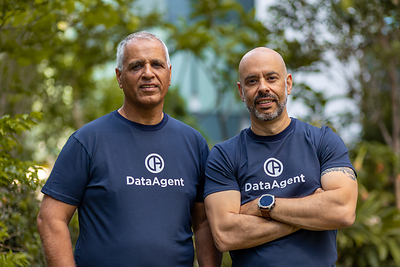
DataAgent is led by the company's two Co-Founders Ishay Yaari (CEO) and Nati Shalom (CTO), who worked together at Cloudify, a cloud orchestration company acquired by Dell in 2023. The company currently has a team of 15 and is actively recruiting additional go-to-market staff in the United States and Israel.
DataAgent's remediation-first platform acts as an AI-native autonomous SRE (site reliability engineer) for Kubernetes and connected infrastructure. The platform operates directly within cloud-native control planes and integrates with existing observability systems as a lightweight overlay rather than a replacement.
The platform deploys agents to capture high-fidelity signals at the source and acts autonomously to remediate issues the moment a fault occurs, which eliminates the need for expensive external data transfers. By forwarding only relevant data for deeper inspection when a fault requires it, the DataAgent platform enables teams to drastically lower their observability bill without downtime or the risk of a full migration.
"In DataAgent, observability is just one feature - the real product is a self-healing infrastructure," said Ishay Yaari, Co-Founder and CEO of DataAgent. "We pair a production remediation engine that fixes failures after they happen with a pre-production engine that blocks them before code ever ships. And they are not separate products: prevention and remediation are fused into one continuous lifecycle, so the system gets smarter with every failure it stops and every incident it resolves."
"Applying rapidly evolving AI technology to major pain points with transformational results is the holy grail", said Catherine Leun, Co-Founder and Partner at MizMaa Ventures. "DataAgent is doing exactly that by moving observability beyond insight and toward action."
"DataAgent is attacking one of the most expensive and persistent problems in modern software infrastructure: systems that can tell engineers something is broken, but cannot safely fix it," said Alexander Assim, Managing Partner of Alicorn Venture Partners. "What attracted us to DataAgent is the company's ability to combine autonomous remediation with a deployment model that keeps customer infrastructure and telemetry under the customer's control."
Reversing the Order of Operations
Conventional observability platforms detect a fault and route it to an engineer, who then investigates and applies a fix. This model requires a second, paid copy of a customer's telemetry - the logs and metrics a system produces about itself - to be shipped to a vendor's cloud. This process grows more expensive as the system it watches grows. Observability spending now averages 17% of total compute infrastructure spending, according to Grafana Labs' 2025 Observability Survey.
DataAgent reverses that order. The platform reads live system state, topology and configuration drift where the data already sits, identifies the cause of an incident and applies a verified fix. A deeper root-cause analysis is run offline after the service is restored. By restoring service first, rather than waiting on deep diagnostics, DataAgent dramatically shortens mean-time-to-resolution (MTTR). Telemetry never leaves the customer's environment because the platform runs directly inside their own cluster and integrates alongside existing observability tools rather than replacing them.
"Traditional observability is hitting a wall of complexity and cost," according to the research analyst firm Gartner. "Agentic AI breaks down silos and accelerates root cause analysis by moving from explanation to action. This collaborative approach enables self-healing and self-optimizing systems, bridging the gap from data to insight to action."
Platform Capabilities
Four elements of the platform's design enable support for autonomous remediation:
- Remediation-first - the platform autonomously resolves incidents in real-time and restores uptime using safe, guardrail-controlled actions the user defines rather than relying on traditional approaches to root-cause analysis that require expensive data ingestion transfers.
- 360-degree architectural context - the platform builds a working model of the customer's topology, environment, code and configuration rather than acting on isolated logs and traces. A fix applied to a misread system state carries real risk, so precision determines what the platform can safely do on its own.
- Continuous reinforcement learning - during onboarding, the platform runs a discovery phase that shows a customer which classes of failure it can already remediate and sets out a timeline for closing the remaining gaps. The platform adapts to new failure modes over time and acts autonomously on a class of fault only once it has been proven correct on that class, while other cases are routed for human intervention, deployable through the user's existing change-management process or a single CLI command.
- An open-source agent – the platform's agent is open source and can be deployed and run standalone at no cost with a paid SaaS tier for fleet management and orchestration. This approach addresses enterprise resistance to running closed software inside production environments.
"The industry has spent 15 years building better ways to watch production and charging more for it every year. Legacy tools have become data-heavy and reactive, while recent attempts to bolt AI copilots onto this broken model have not changed the outcome," explained Nati Shalom, Co-Founder and CTO of DataAgent. "We have built DataAgent the other way around. Our platform and agents act where the data already sits, restore health first and earn autonomy one fault class at a time. Autonomy is not an add-on feature for observability; it is a fundamental architectural shift that slashes costs as a direct result."
Financial Impact
The design of the DataAgent platform includes two important financial benefits for customers:
- Adoption without replacement - customers can run the DataAgent platform above their existing monitoring stack, where it resolves routine faults locally and forwards data for deeper inspection only when a fault requires it. Teams see results without the downtime and the risk of a full migration, while drastically lowering their observability bill.
- Analyzing telemetry locally - instead of ingesting and indexing terabytes of redundant logs, DataAgent's root cause analysis engine focuses deep inspection on the small fraction of code paths that dictate stability. This dramatically scales down expensive log-indexing pipelines, yielding a far lower cost structure than legacy tools.
"In ten years, no one has ever heard an engineering leader say their organization's observability costs went down and that is no accident," said Yaari. "When a vendor's revenue is your data ingest, it cannot cut your bill without cutting its own. DataAgent can run alongside your existing tools, while filtering out the noise and rerouting data only when an incident demands it. There is no need for an expensive second copy of your data and everything pulled live from the source so customers can cut up to 90% of their observability spend.
About DataAgent
DataAgent is building a Digital Immune System for modern applications: a private, enterprise-grade, remediation-first platform designed to replace legacy observability tools. Founded in January 2026 and led by CEO Ishay Yaari and CTO Nati Shalom, the company prioritizes real-time autonomous remediation, including restarting, scaling and rolling back workloads, over conventional root-cause analysis. By processing in-cluster and working from a focused set of core metrics, DataAgent removes the need for large data ingestion pipelines. The company has operating infrastructure in the United States and Israel and closed a $10 million pre-seed round in 2026 led by MizMaa Ventures and Alicorn Venture Partners. For more information, please visit www.data-agent.co.

 View original content to download multimedia:https://www.prnewswire.com/news-releases/dataagent-emerges-from-stealth-and-launches-remediation-first-platform-with-10-million-pre-seed-funding-302866110.html
SOURCE DataAgent

