SCOTTSDALE, Dec. 18, 2025 (GLOBE NEWSWIRE) -- DISCLAIMER: This content contains affiliate links. Compensation may be earned if readers choose to purchase the product mentioned through links provided. This press release is for informational purposes only and does not constitute medical advice. Individuals should consult qualified healthcare professionals before starting any dietary supplement. The statements regarding dietary supplements have not been evaluated by the Food and Drug Administration and are not intended to diagnose, treat, cure, or prevent any disease.
FOR IMMEDIATE RELEASE
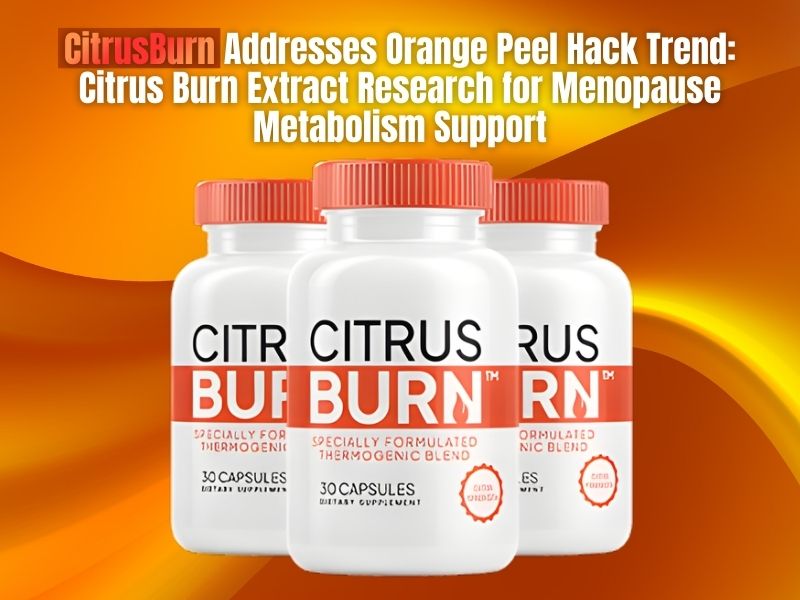
As social media platforms, including TikTok, continue to amplify discussions around the "orange peel hack" for weight management, consumer interest in citrus-based thermogenic supplements has surged heading into 2026. Among the products gaining attention is CitrusBurn, a dietary supplement that combines bitter orange (Citrus aurantium) extract with other researched botanicals, marketed primarily to women ages 40-65 experiencing metabolic changes during perimenopause and menopause. Additional information is available on the official CitrusBurn website. Searches for "orange peel hack" and citrus extract supplements have risen in Q4 2025, reflecting growing attention to natural thermogenic compounds. This report reviews research behind citrus-based thermogenic ingredients, evaluates CitrusBurn, and provides consumer guidance.
The "Orange Peel Hack" Phenomenon: Social Media Meets Supplement Science
The term "orange peel hack" has emerged on social media platforms, particularly TikTok, as viral shorthand for using bitter orange (Citrus aurantium) extract to support metabolism and thermogenesis. While the phrase itself is marketing language rather than scientific terminology, it references legitimate research on p-synephrine, a naturally occurring alkaloid found in bitter orange peel. A 2012 review published in the International Journal of Medical Sciences analyzed 20 human clinical studies involving bitter orange extract and p-synephrine. The review found that p-synephrine at doses of 10-53 mg increased resting metabolic rate by an average of 65 calories per day and showed modest reductions in body weight when combined with diet and exercise interventions (Stohs et al., 2012, Int J Med Sci, 9(7), pp.527-538). However, moving from ingredient-level studies to social media-marketed products requires careful consumer scrutiny. Dosing varies, ingredient disclosure is inconsistent, and proprietary blends often limit transparency.
Understanding Thermogenesis and Metabolic Decline in Women Over 40
Before considering individual products, it is important to first understand the metabolic changes affecting this demographic.
Why Metabolism Changes During Perimenopause and Menopause
A landmark 2021 study published in Science by Pontzer and colleagues examined daily energy expenditure across the human lifespan, finding that total metabolic rate peaks around age 20 and declines steadily after age 60. The research identified significant metabolic shifts during midlife, particularly in women experiencing hormonal transitions (Pontzer et al., 2021, Science, 373(6556), pp.808-812). According to the study, metabolic decline during perimenopause and menopause results from multiple interconnected factors: declining estrogen levels, progressive loss of muscle mass (sarcopenia), changes in fat distribution favoring visceral adiposity, reduced physical activity levels, and alterations in insulin sensitivity. A 2019 review in Maturitas examined metabolic changes during menopause and reported that postmenopausal women experienced an average 2-4% reduction in resting metabolic rate compared to premenopausal women of similar age and body composition (Marlatt et al., 2019, Maturitas, 123, pp.53-61).
Thermogenesis: The Body's Calorie-Burning Process
Thermogenesis refers to the production of heat in the body through metabolic processes. There are several types of thermogenesis that contribute to total daily energy expenditure: Basal metabolic thermogenesis accounts for 60-70% of daily calorie burn in sedentary individuals and represents the energy required to maintain vital functions at rest. Diet-induced thermogenesis accounts for approximately 10% of daily energy expenditure and reflects the energy cost of digesting, absorbing, and processing nutrients. Exercise-induced thermogenesis varies widely with activity levels, while non-exercise activity thermogenesis (NEAT) captures energy expended through everyday movements. With age and hormonal change, all forms of thermogenesis may decline, fueling consumer interest in metabolic support supplements.
CitrusBurn: Product Overview and Formula Analysis
CitrusBurn is manufactured in an FDA-registered, GMP-certified facility in the United States. According to the company's marketing materials, the supplement was formulated specifically for women experiencing metabolic changes during perimenopause and menopause, though the company states the formula can be used by adults of any gender. Additional product information is available on the official CitrusBurn website.
Ingredient Composition: What the Label Shows
According to CitrusBurn's Supplement Facts panel, each capsule contains: Chromium (as Chromium Picolinate): 100 mcg Proprietary Blend (510 mg per capsule):
- Bitter Orange (Citrus aurantium L.) fruit extract
- Green Tea (Camellia sinensis) leaf extract
- Apple Cider Vinegar
- Ginger (Zingiber officinale) root
- Cayenne (Capsicum annuum) fruit
- Cinnamon (Cinnamomum cassia) bark extract
- Berberine HCL
- Banaba (Lagerstroemia speciosa) leaf extract
- Korean Ginseng (Panax ginseng) aerial extract
- Resveratrol (from Polygonum cuspidatum root extract)
Other Ingredients: Hypromellose (vegetable capsule), Microcrystalline Cellulose, Magnesium Stearate, Silicon Dioxide The company states that CitrusBurn is plant-based, non-GMO, soy-free, and dairy-free, and that each batch undergoes third-party testing for purity and potency. The suggested use, according to the product label, is one capsule daily with water.
The Proprietary Blend Consideration: Dosing Transparency
An important consideration for consumers evaluating CitrusBurn is the proprietary blend. While the total blend weight is disclosed (510 mg per capsule), individual ingredient amounts are not specified. This creates a dosing transparency challenge. Research on the individual ingredients in CitrusBurn typically used the following doses:
- P-synephrine (from bitter orange): 10-53 mg daily in studies showing metabolic effects
- EGCG (from green tea extract): 400-600 mg daily in weight management studies
- Berberine: 900-1500 mg daily in metabolic health research
- Capsaicin (from cayenne): 2-6 mg daily in thermogenic studies
With 10 ingredients sharing a 510 mg total blend, it is mathematically unlikely that therapeutic research doses are achieved simultaneously for multiple ingredients. Without disclosed individual amounts, consumers and healthcare providers cannot determine whether the formula contains evidence-based levels of key compounds. FDA regulations under the Dietary Supplement Health and Education Act (DSHEA) do not require manufacturers to disclose individual ingredient amounts in proprietary blends. However, consumers seeking evidence-based supplementation often prefer products that fully disclose ingredient lists, enabling comparison with published research.
Research on CitrusBurn's Key Ingredients
The following represents ingredient-level research on compounds in CitrusBurn's formula. These are individual findings and do not mean that CitrusBurn, as a finished product, has been clinically studied, or that results from ingredient research guarantee outcomes with this specific formula.
Bitter Orange Extract and P-Synephrine
P-synephrine is a naturally occurring alkaloid found in bitter orange peel that has been studied for thermogenic properties. A 2018 study in the Journal of the International Society of Sports Nutrition examined acute cardiovascular effects of p-synephrine and found that a single 50 mg dose increased calorie expenditure during exercise and raised metabolic rate for up to 75 minutes post-ingestion, without significant changes in heart rate or blood pressure in healthy adults (Ratamess et al., 2018, J Int Soc Sports Nutr, 15(1), p.23). However, researchers note that p-synephrine can interact with certain medications, particularly those affecting cardiovascular function. The FDA has issued warnings about bitter orange when combined with stimulants like caffeine.
Green Tea Extract and EGCG
Green tea extract, standardized for epigallocatechin gallate (EGCG), is among the most studied natural compounds for metabolic support. A 2009 meta-analysis published in the International Journal of Obesity reviewed 11 studies and found that green tea catechins at doses of 100-460 mg EGCG daily led to an average weight loss of 1.31 kg (2.9 lbs) over 12 weeks compared to placebo groups (Hursel et al., 2009, Int J Obes, 33(9), pp.956-961). Research published in the Journal of Medicinal Food found that EGCG increased thermogenesis by inhibiting catechol-O-methyltransferase (COMT), an enzyme that breaks down norepinephrine—a hormone that signals fat cells to break down stored fat (Shixian et al., 2006, J Med Food, 9(4), pp.451-458). Green tea extract contains naturally occurring caffeine, which may contribute to thermogenic effects but can also cause jitteriness or sleep disruption in sensitive individuals.
Berberine for Metabolic Health
Berberine, a compound extracted from several plants, including goldenseal and barberry, has been extensively studied for its effects on glucose metabolism and insulin sensitivity. A 2012 meta-analysis published in Evidence-Based Complementary and Alternative Medicine found that berberine at doses of 900-1500 mg per day significantly reduced body weight, BMI, and waist circumference in individuals with metabolic syndrome and type 2 diabetes (Dong et al., 2012, Evid Based Complement Alternat Med, 2012, p.591654). Research indicates that berberine activates AMP-activated protein kinase (AMPK), an enzyme that regulates cellular energy homeostasis. Studies suggest berberine may improve insulin sensitivity and support gut microbiome health. Researchers note that berberine can interact with medications for blood sugar, blood pressure, and blood clotting, and may cause digestive upset at higher doses. Medical consultation is recommended before use, particularly for individuals taking medications.
Capsaicin from Cayenne Pepper
Capsaicin, the compound that gives cayenne pepper its heat, has been studied for thermogenic properties through activation of TRPV1 receptors. A 2012 systematic review published in Appetite found that capsaicin and capsinoids increased energy expenditure by approximately 50 calories per day and reduced appetite in some study participants (Whiting et al., 2012, Appetite, 59(2), pp.341-348). A 2015 review in Open Heart suggested that capsaicin may support metabolic health by increasing brown adipose tissue (BAT) activity, which burns calories to generate heat (McCarty et al., 2015, Open Heart, 2(1), p.e000262).
Apple Cider Vinegar
Apple cider vinegar (acetic acid) has been studied for potential effects on satiety and blood sugar management. A 2009 study in Bioscience, Biotechnology, and Biochemistry found that daily consumption of vinegar (15 mL containing 750 mg acetic acid) for 12 weeks led to modest reductions in body weight, BMI, and visceral fat in obese adults (Kondo et al., 2009, Biosci Biotechnol Biochem, 73(8), pp.1837-1843). However, the amount of apple cider vinegar in CitrusBurn's proprietary blend is not disclosed, making it impossible to determine whether the formula contains research-supported levels.
Chromium Picolinate
Chromium is an essential trace mineral that plays a role in insulin function and glucose metabolism. CitrusBurn contains 100 mcg of chromium as chromium picolinate per capsule. A 2013 systematic review published in Obesity Reviews examined 11 randomized controlled trials and found that chromium supplementation (200-1000 mcg daily) produced a modest average weight loss of 0.75 kg (1.65 lbs) over 12-16 weeks compared to placebo (Onakpoya et al., 2013, Obes Rev, 14(6), pp.496-507). The 100 mcg dose in CitrusBurn is at the lower end of the range studied in research.
Additional Botanicals
CitrusBurn also contains ginger root, cinnamon bark extract, Banaba leaf extract, Korean ginseng, and resveratrol. While each of these compounds has been studied for various health applications, the amounts present in CitrusBurn's proprietary blend are not disclosed, and research on these ingredients typically uses higher doses than would be feasible in a multi-ingredient 510 mg blend.
Consumer Considerations
Consumers considering any thermogenic dietary supplement may wish to discuss potential interactions and suitability with a qualified healthcare professional—especially individuals who are pregnant or nursing, have cardiovascular conditions, or take medications that affect blood pressure, blood sugar, or blood clotting. The product label states: "Do not exceed recommended dose. Not for use by those under the age of 18 or pregnant or nursing mothers. Consult with a physician prior to use, especially if you are taking a medication or have a medical condition." According to healthcare professionals, thermogenic botanical supplements can interact with medications. Berberine can interact with medications for blood sugar, blood pressure, and blood clotting. P-synephrine from bitter orange can interact with medications affecting cardiovascular function. Green tea extract contains naturally occurring caffeine, which may interact with stimulant medications and cause sleep disruption in sensitive individuals. The North American Menopause Society (NAMS) published clinical guidelines in 2023 recommending that women experiencing menopausal weight gain prioritize evidence-based lifestyle interventions including calorie reduction through portion control and nutrient-dense food choices, resistance training to preserve muscle mass and maintain metabolic rate, adequate protein intake (0.8-1.2 grams per kilogram of body weight daily), 7-9 hours of sleep per night to support metabolic hormones, and stress management to reduce cortisol-driven fat storage. Healthcare providers note that while certain botanical supplements show modest thermogenic effects in research, these effects are incremental—typically representing 50-150 additional calories burned per day when effective. In contrast, a single 30-minute resistance training session can burn 150-300 calories while also building metabolically active muscle tissue.
Realistic Expectations: What the Research Shows
Research on thermogenic supplements suggests that when effective, results are typically modest and gradual. Studies showing positive effects on weight and body composition generally report weight loss of 1-4 pounds over 8-12 weeks when supplements are combined with calorie-controlled diets and regular physical activity. Individual responses vary widely based on factors including baseline metabolic rate, hormonal status, genetic factors, medication use, sleep quality, stress levels, dietary composition, and consistency of supplement use combined with lifestyle factors. The Federal Trade Commission (FTC) requires that supplement companies substantiate weight loss claims with reliable scientific evidence and avoid making guarantees about typical results. Under FTC guidelines, testimonials and reviews must represent typical consumer experiences or clearly disclose that results are not typical.
Availability and Consumer Information
CitrusBurn is sold online through the brand's official website. Product availability, policies, and terms may change over time. Consumers are encouraged to review the most current details on the official CitrusBurn website before making any purchase decision. According to CitrusBurn, the product is offered with a satisfaction guarantee. Consumers should review the full terms and conditions, including eligibility requirements and any return procedures, directly with the company.
Manufacturing and Quality Standards
According to the company's website, CitrusBurn is manufactured in an FDA-registered facility that follows Good Manufacturing Practice (GMP) standards. The company states that each batch undergoes third-party testing for purity and potency, though specific testing certificates are not publicly available on the website. The FDA does not approve dietary supplements before they reach the market. Instead, supplement manufacturers are responsible for ensuring the safety and labeling accuracy of their products. The FDA can take action against unsafe products after they are on the market.
Company Contact Information
CitrusBurn is distributed through ClickBank, a digital product platform. The company can be reached through the following channels:
Phone: +1 (800) 985-7325
Email: support@citrusburn.com
Website: Product information is available on the official CitrusBurn website
According to the company, customer service is available 24 hours a day, seven days a week.
Research Citations
This report references the following peer-reviewed research studies:
- Pontzer, H., Yamada, Y., Sagayama, H., et al., 2021. Daily energy expenditure through the human life course. Science, 373(6556), pp.808-812.
- Marlatt, K.L., Pitynski-Miller, D.R., Gavin, K.M., et al., 2019. Body composition and cardiometabolic health across the menopause transition. Maturitas, 123, pp.53-61.
- Stohs, S.J., Preuss, H.G. and Shara, M., 2012. A review of the human clinical studies involving Citrus aurantium (bitter orange) extract and its primary protoalkaloid p-synephrine. International Journal of Medical Sciences, 9(7), pp.527-538.
- Ratamess, N.A., Bush, J.A., Stohs, S.J., et al., 2018. Acute cardiovascular effects of p-synephrine alone and in combination with caffeine. Journal of the International Society of Sports Nutrition, 15(1), p.23.
- Dong, H., Wang, N., Zhao, L., et al., 2012. Berberine in the treatment of type 2 diabetes mellitus: a systematic review and meta-analysis. Evidence-Based Complementary and Alternative Medicine, 2012, p.591654.
- Hursel, R., Viechtbauer, W. and Westerterp-Plantenga, M.S., 2009. The effects of green tea on weight loss and weight maintenance: a meta-analysis. International Journal of Obesity, 33(9), pp.956-961.
- Shixian, Q., VanCrey, B., Shi, J., et al., 2006. Green tea extract-induced thermogenesis and weight loss via epigallocatechin gallate inhibition of catechol-O-methyltransferase. Journal of Medicinal Food, 9(4), pp.451-458.
- Whiting, S., Derbyshire, E. and Tiwari, B.K., 2012. Capsaicinoids and capsinoids: A potential role for weight management? A systematic review of the evidence. Appetite, 59(2), pp.341-348.
- McCarty, M.F., DiNicolantonio, J.J. and O'Keefe, J.H., 2015. Capsaicin may have significant potential to promote vascular and metabolic health. Open Heart, 2(1), p.e000262.
- Kondo, T., Kishi, M., Fushimi, T., et al., 2009. Vinegar intake reduces body weight, body fat mass, and serum triglyceride levels in obese Japanese subjects. Bioscience, Biotechnology, and Biochemistry, 73(8), pp.1837-1843.
- Onakpoya, I., Posadzki, P. and Ernst, E., 2013. Chromium supplementation in overweight and obesity: a systematic review and meta-analysis of randomized clinical trials. Obesity Reviews, 14(6), pp.496-507.
Disclaimer
This press release is for informational purposes only. The information provided about CitrusBurn and thermogenic research does not constitute medical advice. Individuals should consult qualified healthcare professionals before starting any new dietary supplement, particularly if they have existing medical conditions, take medications, or are pregnant or nursing. The statements in this release regarding dietary supplements have not been evaluated by the Food and Drug Administration. Dietary supplements are not intended to diagnose, treat, cure, or prevent any disease.
Contact:
Company:
CitrusBurn Customer Support
Email: support@citrusburn.com
Phone: +1 (800) 985-7325
END

Email: support@citrusburn.com Phone: +1 (800) 985-7325

