BOISE, ID, Dec. 31, 2025 (GLOBE NEWSWIRE) -- Disclaimer: This article is for informational purposes only and does not constitute medical advice. Compression socks are general wellness products. Consult a qualified healthcare professional before making health-related decisions. This article contains affiliate links. If you purchase through these links, a commission may be earned at no additional cost to you.
As health-conscious consumers enter 2026 with renewed focus on wellness fundamentals, compression socks have emerged as a practical consideration for people seeking circulation support during extended sitting, standing, and travel.
For those researching the best compression socks for 2026, the evaluation process typically involves sorting through various options while determining which features actually matter for specific use cases. This analysis examines how consumers evaluate compression socks, what criteria typically influence purchasing decisions, and where Zoom Wellness CopperZen Compression Socks enter the conversation.
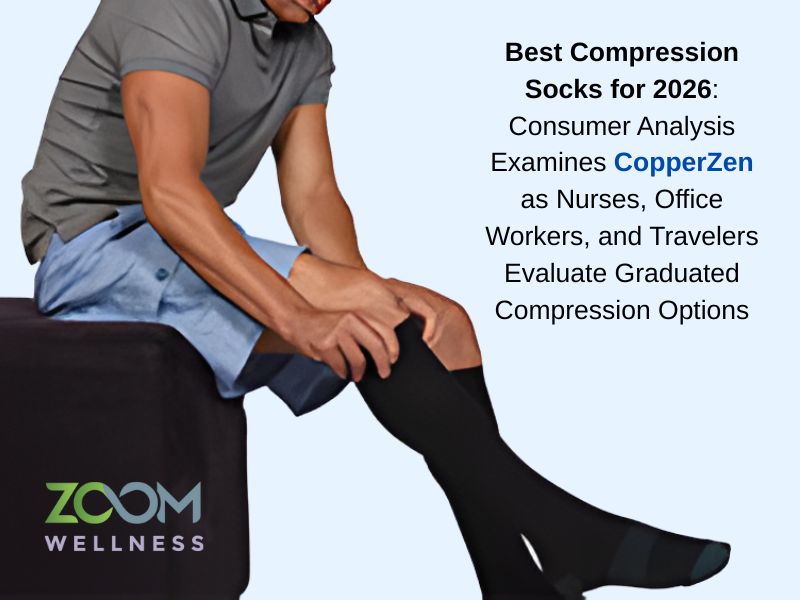
In this context, "best" refers to the criteria consumers use to evaluate compression socks for their individual circumstances, not a universal ranking or recommendation. This analysis does not rank brands or recommend a single option for everyone. Instead, it explains common evaluation criteria and how one product is positioned within that framework, providing information readers need to make their own informed decisions. This evaluation builds upon previous independent consumer analysis of compression sock evaluation criteria with updated 2026 context and expanded occupational considerations.
Why Are More Consumers Researching Compression Socks in 2026?
Consumer interest in compression socks has grown alongside increased awareness of how modern lifestyles affect leg comfort and circulation.
The Sedentary Reality: According to reporting from Forbes and other outlets, many adults spend the majority of their waking hours in sedentary positions, whether at desks, in vehicles, or during travel. This has elevated circulation as a wellness consideration for a broad population.
The Extended Standing Factor: Healthcare workers, retail employees, teachers, servers, and others who stand for eight to twelve hours per shift have long understood the physical demands of their work. As awareness of occupational wellness has grown, interest in supportive products has followed.
The Travel Consideration: With January marking a surge in travel bookings following the holiday season, many consumers are researching ways to stay comfortable during extended periods of immobility on flights and road trips.
The January Evaluation Window: Consumer research patterns indicate that January represents a concentrated period for health product evaluation. Many adults who received fitness trackers, gym memberships, or wellness products as holiday gifts are simultaneously researching complementary products. For those whose 2026 goals include spending more time on their feet, whether through exercise, standing desks, or increased activity, compression socks represent a low-friction addition to wellness routines that requires no significant lifestyle changes.
These factors help explain why consumers searching for the best compression socks in 2026 encounter a growing range of options across price points and feature sets.
How CopperZen Compares to Other Compression Sock Approaches
Consumers researching the best compression socks for 2026 encounter several distinct product categories, each with different positioning and price points.
Premium Athletic-Focused Options: Some products in this segment emphasize performance and recovery positioning and may be priced at the higher end of the category. These typically target runners, cyclists, and those prioritizing post-workout recovery.
Style-Forward Everyday Options: Some brands prioritize appearance and color variety alongside compression design. These products often target consumers who want compression benefits without the clinical appearance of traditional compression stockings.
Budget Multi-Pack Options: Multi-pair packs sold through large marketplaces can vary widely in compression consistency and durability. Compression quality and construction standards differ significantly in this category.
Copper-Infused Compression Options: A smaller category, including CopperZen, combines compression design with copper-infused textiles positioned around freshness and fabric hygiene considerations. This approach combines the mechanical circulation support of compression with the antimicrobial properties attributed to copper materials.
Clinical-Grade Products: Some products are designed for clinical contexts and may require professional guidance or fitting depending on the use case. These products serve different use cases than consumer wellness products.
Understanding these categories helps consumers evaluate where CopperZen fits within their specific priorities and budget.
What Should You Look for When Buying Compression Socks?
The term "best" has no universal definition in the compression sock category. What qualifies as best depends entirely on individual circumstances, intended use, and personal priorities.
When consumers research compression socks, evaluation criteria typically include:
Compression Level and Design: Compression levels are described in mmHg (millimeters of mercury), with products varying from lighter everyday options to higher levels typically used under clinical guidance. The principle of graduated compression, which applies greater pressure at the ankle and decreasing pressure toward the knee, has been discussed in medical education sources as a general circulation-support concept. Consumers often evaluate whether products specify this design clearly.
Material Composition: Fabric affects breathability, moisture management, durability, and comfort during extended wear. For those concerned about freshness during long shifts or travel, odor and hygiene considerations often influence evaluation.
Comfort for Extended Wear: Many consumers report abandoning compression socks due to discomfort. Features like reinforced construction, no-slip cuffs, and moisture management affect whether people actually wear compression socks consistently enough to experience potential benefits.
Fit and Sizing: Compression socks that are too tight may restrict circulation, while socks that are too loose provide no compression benefit and tend to slide down. Proper fit is essential for the mechanical function of graduated compression.
Value and Guarantee Terms: Consumers evaluate price per pair, bundle options, shipping costs, and return policies when comparing options in this category.
Understanding these criteria helps consumers evaluate any compression sock product against their specific needs rather than relying on marketing claims.
What Makes CopperZen Different From Other Compression Socks?
One product frequently encountered by consumers researching compression socks is Zoom Wellness CopperZen Compression Socks. Understanding what this product offers, according to the company, helps consumers determine whether it warrants further evaluation.
Company Background: According to publicly available information, Zoom Wellness is based in Boise, Idaho and was founded in 2017. The company states it partners with Zenith Labs, an Illinois-based wellness company. Dr. Ryan Shelton, N.M.D., serves as Health and Wellness Director.
Product Positioning: According to the company, CopperZen Compression Socks were designed to address common complaints consumers have with traditional compression socks, specifically around comfort, consistency of compression, and materials.
The product incorporates two primary technology approaches:
Graduated Compression Design: According to the company, CopperZen utilizes what they call CircuBoost Technology to deliver graduated compression in the 15-20 mmHg range. The 15-20 mmHg range is frequently referenced in consumer-facing educational materials when discussing non-prescription compression options. The principle of graduated compression is discussed in medical education sources as a general circulation-support concept. This research relates to the compression principle itself and does not constitute testing, endorsement, or evaluation of any specific product.
Copper-Infused Fabric: According to the company, CopperZen socks feature what they call Copper-i10 fabric, described as medical-grade nylon infused with 12 percent copper ions. The company states this formulation uses copper ions rather than copper oxide particles. Research on copper's antimicrobial properties has been published in peer-reviewed journals, and the EPA has registered copper surfaces as antimicrobial. This research relates to copper materials generally and does not constitute testing of the finished CopperZen product.
Comfort Features: According to the product specifications, CopperZen includes reinforced heel, toe, and arch support; anti-moisture technology; a no-slip cuff design; thermal stabilization; and latex-free construction. The company positions these features as addressing the comfort issues that cause consumers to abandon compression socks after purchase, and readers can view the current CopperZen Compression Socks offer (official Zoom Wellness page) for complete product specifications and current availability status.
How Different Consumer Groups Evaluate Compression Socks
Consumer needs vary significantly based on occupation, lifestyle, and specific concerns. Understanding these differences helps explain why compression sock evaluation is highly individual.
Healthcare Workers and Extended-Shift Professionals
Nurses, doctors, retail employees, and others who stand for extended shifts represent a significant segment of compression sock consumers. A separate analysis examining compression socks for healthcare professionals explored specific evaluation criteria relevant to this audience.
According to themes from customer feedback published by the brand, some healthcare workers describe prioritizing compression that remains effective throughout an entire shift, materials designed for extended wear that manage moisture and freshness, construction that prevents sliding or bunching during active movement, and durability to withstand frequent washing. These accounts reflect individual perspectives and are not intended to represent typical results or clinical outcomes.
The company states that the 15-20 mmHg compression level was designed for extended wear without excessive tightness. The copper-infused fabric is intended to support freshness-related considerations during long shifts.
Office Workers and Desk-Bound Professionals
Office workers and those with desk-bound jobs represent another significant consumer segment, though their needs differ from those who stand all day.
Extended sitting reduces the natural muscle pumping action that helps return blood from the legs. Some research on prolonged sitting in healthy adults suggests that extended immobility may affect circulation-related measures, which is one reason some office workers explore comfort-support options.
For this audience, compression comfortable enough for eight or more hours of seated wear, materials suitable for climate-controlled office environments, and professional appearance compatible with work attire often influence evaluation.
Travelers and Frequent Flyers
Air travelers represent the consumer segment often discussed in connection with compression socks by healthcare providers, particularly for long-haul flights.
Extended flights combine prolonged immobility, cramped seating positions, cabin pressure changes, and low humidity. Many travelers first encounter compression socks through pre-flight discussions with healthcare providers.
The company describes the graduated compression design as supporting circulation during periods of immobility, and readers can view the current CopperZen Compression Socks offer (official Zoom Wellness page) for sizing information and shipping terms. The thermal stabilization feature is positioned as maintaining comfort across temperature variations.
Active Lifestyle and Fitness Enthusiasts
As 2026 fitness goals take shape, some consumers evaluate compression socks for athletic recovery and performance support. Research published in peer-reviewed journals has examined compression garments in athletic contexts, though findings vary across studies and applications.
For this audience, recovery support after workouts, comfort during physical activity, and durability for active use often influence evaluation.
Compression Socks: Answers to Common Consumer Questions
Consumers researching compression socks often have similar questions. Understanding these helps inform evaluation.
Do Compression Socks Actually Work?
The principle of graduated compression has been discussed in medical education sources as a general circulation-support concept. When properly fitted, graduated compression socks apply pressure that decreases from ankle to calf, which may support blood flow in the legs. Individual experiences vary based on factors including fit, compression level, consistency of use, and baseline health status. This research relates to the compression principle itself and does not constitute evaluation of any specific product.
What Compression Level Is Appropriate?
Compression levels are measured in mmHg. The 15-20 mmHg range is frequently referenced in consumer-facing educational materials when discussing non-prescription compression options for general wellness considerations such as extended sitting, standing, and travel. Higher compression levels are typically discussed in clinical contexts. Consumers evaluating compression socks for general wellness often encounter this range when researching non-prescription options. Those with specific health concerns should consult healthcare providers.
Are Compression Socks Good for Standing All Day?
The graduated compression principle, which applies greater pressure at the ankle and decreasing pressure toward the knee, is designed to support blood flow during extended standing. Healthcare workers, retail employees, and others who stand for long shifts commonly evaluate compression socks for this use case. Individual experiences vary based on fit, compression level, and baseline health factors.
How Should Compression Socks Feel?
Properly fitted compression socks should feel snug but not painful. The pressure should be noticeable at the ankle and gradually decrease toward the knee. If socks feel uncomfortably tight, cause numbness, or leave deep marks, the sizing or compression level may not be appropriate.
What About Sliding and Bunching?
Sliding typically indicates sizing issues or design limitations. Features like no-slip cuffs are designed to address this common complaint. Consumers who have experienced sliding with previous compression socks often prioritize this feature when evaluating alternatives.
Can I Wear Compression Socks to Bed?
This decision should be made with healthcare provider guidance. According to general medical guidance, compression socks designed for daytime use in the 15-20 mmHg range are typically intended for active hours when upright. Overnight use involves different considerations. Those considering overnight use should consult their healthcare provider.
How Long Do Compression Socks Last?
Compression sock lifespan depends on frequency of use, washing practices, and construction quality. Most manufacturers recommend replacing compression socks every three to six months with regular use, as the elastic fibers that provide compression may lose effectiveness over time. According to CopperZen product materials, the reinforced construction is designed for durability with repeated washing.
Are Copper Compression Socks Better Than Regular Compression Socks?
Both copper-infused and non-copper compression socks can deliver graduated compression support. The primary difference relates to fabric properties: copper's antimicrobial characteristics have been studied for odor and hygiene applications. Whether this additional feature provides meaningful value depends on individual priorities, particularly for those concerned about freshness during extended wear.
Is the Graduated Compression Principle Supported by Research?
The principle of graduated compression has been discussed in medical education sources as a general circulation-support concept. This research relates to the compression principle itself and does not constitute testing, endorsement, or evaluation of any specific product. The specific CopperZen product has not been independently clinically tested.
What Is the Copper Fabric Intended to Do?
According to the company, the Copper-i10 fabric containing 12 percent copper ions is intended to address odor and hygiene considerations during extended wear. Copper's antimicrobial properties have been studied in peer-reviewed research. This research relates to copper materials generally and does not constitute testing of the finished CopperZen product.
Who Should Consider CopperZen — And Who Should Look Elsewhere
Rather than presenting individual testimonials, this section helps readers self-assess whether CopperZen aligns with their specific situation.
CopperZen May Align Well With People Who:
Prioritize Extended-Wear Comfort: Those who need compression socks they can realistically wear for eight or more hours benefit from features designed for all-day use, including moisture management, breathable fabric, and no-slip construction.
Value Freshness During Long Wear: Healthcare workers, travelers, and others concerned about odor during extended wear may find the copper-infused fabric relevant to their priorities.
Have Experienced Sliding or Bunching: Consumers frustrated with compression socks that slide down during wear often seek products with specific anti-slip features.
Want Graduated Compression Without Prescription: Those seeking everyday circulation support in the 15-20 mmHg range, which is frequently referenced in consumer-facing educational materials for non-prescription options, may find this compression level aligns with their evaluation criteria.
Seek Company-Described Guarantee Terms: The 60-day guarantee, according to the company, allows consumers to evaluate whether compression socks align with their situation before committing.
Other Options May Be Preferable For People Who:
Require Medical-Grade Compression: Those with diagnosed vascular conditions or specific medical needs should work with healthcare providers to determine appropriate compression levels, which may exceed what consumer products offer.
Need Specific Sizing Beyond Standard Ranges: CopperZen is available in two sizes (S/M and L/XL). Those requiring specialized sizing may need to explore alternatives.
Prefer Retail Availability: According to the company, CopperZen is sold directly through its website rather than retail stores. Those preferring in-store purchase may find this inconvenient.
Prioritize Fashion Variety: Consumers seeking multiple colors and patterns may find broader options with style-forward compression sock brands.
Questions to Ask Yourself:
Before choosing compression socks, consider: What is my primary use case (work, travel, exercise, daily wear)? How many hours per day would I realistically wear them? Have I tried compression socks before, and what caused me to stop? Do I have any health conditions that warrant consultation with a healthcare provider?
Your answers help determine which compression sock characteristics matter most for your specific situation, and readers can view the current CopperZen Compression Socks offer (official Zoom Wellness page) to confirm current availability status and guarantee terms.
Understanding Pricing and Policies
According to the company website, Zoom Wellness offers CopperZen Compression Socks in single and multi-pair options.
Pricing Structure (Per Company Website):
According to published pricing, options may include single pairs, three-pair bundles, and five-pair bundles. Availability, pricing, and promotional terms are subject to change. Consumers should verify current terms and availability status directly with the company before purchase.
Guarantee Terms: According to the company website, Zoom Wellness offers a 60-day money-back guarantee. The company states that customers may keep the product even after receiving a refund. Consumers should verify current terms directly with the company before purchase, and readers can view the current CopperZen Compression Socks offer (official Zoom Wellness page) for pricing and availability status.
Realistic Expectations for Any Compression Sock
Consumers evaluating compression socks benefit from understanding that outcomes vary significantly based on individual factors.
Consistency of Use: The principle of graduated compression works through sustained, regular wear. Occasional use produces different results than daily use.
Proper Fit: Compression socks that fit correctly deliver the intended pressure gradient. Sizing errors affect the mechanical function.
Baseline Health: Individual circulation, activity level, and health status all influence how any compression product performs for a specific person.
Realistic Expectations: Compression socks provide mechanical support for circulation. They are wellness products, not medical treatments. Significant health concerns require professional medical evaluation.
Complementary Practices: Movement, hydration, and overall cardiovascular health all affect circulation. Compression socks work alongside healthy habits, not as a replacement for them.
Contact Information
For questions before or during ordering, according to the company website, Zoom Wellness offers customer support, and readers can view the current CopperZen Compression Socks offer (official Zoom Wellness page) for company contact information and support options.
Email: Support@ZoomWellness.com Address: 800 W Main St, Ste 1460, Boise, ID 83702 USA
Final Considerations for 2026
As consumers evaluate compression socks for 2026, several factors inform decision-making.
The Case for Evaluating CopperZen:
The product incorporates graduated compression in the 15-20 mmHg range, which is frequently referenced in consumer-facing educational materials for non-prescription wellness considerations. The copper-infused fabric addresses odor and hygiene considerations relevant to extended-wear scenarios. The comfort features address common complaints that cause consumers to abandon compression socks. The 60-day guarantee, according to the company, provides evaluation flexibility for consumers determining whether compression socks align with their situation.
Considerations to Weigh:
Individual results vary based on fit, consistency of use, and personal health factors. The product is available only through the company website, not retail stores. Compression socks provide mechanical support and are not medical treatments for diagnosed conditions. Those with significant health concerns should consult healthcare providers.
The Bottom Line:
Whether CopperZen represents the appropriate choice depends on individual circumstances, needs, and evaluation criteria. The information in this analysis is intended to support informed decision-making, not to replace individual evaluation or professional medical guidance, and readers can view the current CopperZen Compression Socks offer (official Zoom Wellness page) for current pricing, availability status, and complete policy details.
Who Should Consult a Healthcare Provider Instead of Self-Selecting?
Individuals with diagnosed circulatory conditions, history of blood clots, diabetes affecting circulation, significant or worsening symptoms, or other health conditions should work with healthcare providers rather than self-selecting consumer products. Compression socks support healthy circulation but do not diagnose, treat, or cure medical conditions.
Product Specifications Summary
- Compression Level: 15-20 mmHg graduated compression
- Fabric Composition: 79% nylon, 12% copper nylon (Copper-i10), 9% spandex
- Construction: Latex-free, reinforced heel/toe/arch, no-slip cuff, anti-moisture technology
- Sizes Available: Small/Medium (US Women 6-9, US Men 4.5-7.5) and Large/X-Large (US Women 9.5-12, US Men 8-11)
- Availability: Direct from Zoom Wellness website
- Guarantee: 60-day money-back guarantee (verify current terms with company)
Disclaimers
Medical Disclaimer: This article is for informational purposes only and does not constitute medical advice, diagnosis, or treatment. Compression socks are general wellness products and are not intended to diagnose, treat, cure, or prevent any disease. The information provided does not replace consultation with qualified healthcare professionals. Individuals with health concerns should consult their physician before using compression products.
Results Disclaimer: Individual results vary based on factors including baseline health, consistency of use, proper fit, activity level, and other personal variables. The research cited in this article examines general principles of graduated compression and copper properties. The specific CopperZen product has not been independently clinically studied. Testimonials published by the company reflect individual experiences and are not predictive of results for other users.
FTC Affiliate Disclosure: This article contains affiliate links. If you make a purchase through these links, a commission may be earned at no additional cost to you. This compensation arrangement does not influence the informational content presented in this analysis.
Pricing Disclaimer: All pricing, promotional offers, guarantee terms, and product availability mentioned were based on publicly available information at the time of publication (December 2025). Terms are subject to change without notice. Consumers should verify current pricing and policies directly with Zoom Wellness before making purchasing decisions.
Publisher Responsibility Disclaimer: The publisher has made reasonable efforts to ensure accuracy based on publicly available information at the time of publication. The publisher does not accept responsibility for errors, omissions, or outcomes resulting from use of this information. Readers are encouraged to verify details directly with the company and consult appropriate professionals before making decisions.
Contact Information
Company: Zoom Wellness Email: Support@ZoomWellness.com Address: 800 W Main St, Ste 1460, Boise, ID 83702 USA Website: https://copperzen-socks.com/
This consumer analysis was prepared to support informed decision-making for individuals researching compression sock options. The analysis examines publicly available product information and general research context. It does not constitute endorsement, recommendation, or medical advice.

Email: Support@ZoomWellness.com